

Colour has the power to make an outdoor space feel calm, welcoming, playful or bold. It can allow planters and furnishings to blend quietly into their surroundings or transform them into defining features. More than a decorative finishing touch, the right palette helps establish the atmosphere and identity of a landscape, shaping both how we experience it and remember it.
Editorial, Projects, Products
Colour in the Landscape: Designing Outdoor Spaces That Shape How We Feel
Why does one outdoor space make us want to slow down, while another feels lively and energizing? Planting, light and layout all play a role, but colour may be one of the first things we notice, even when we are not consciously looking for it.
- By Jill Koh Chiu | Green Theory contributing writer
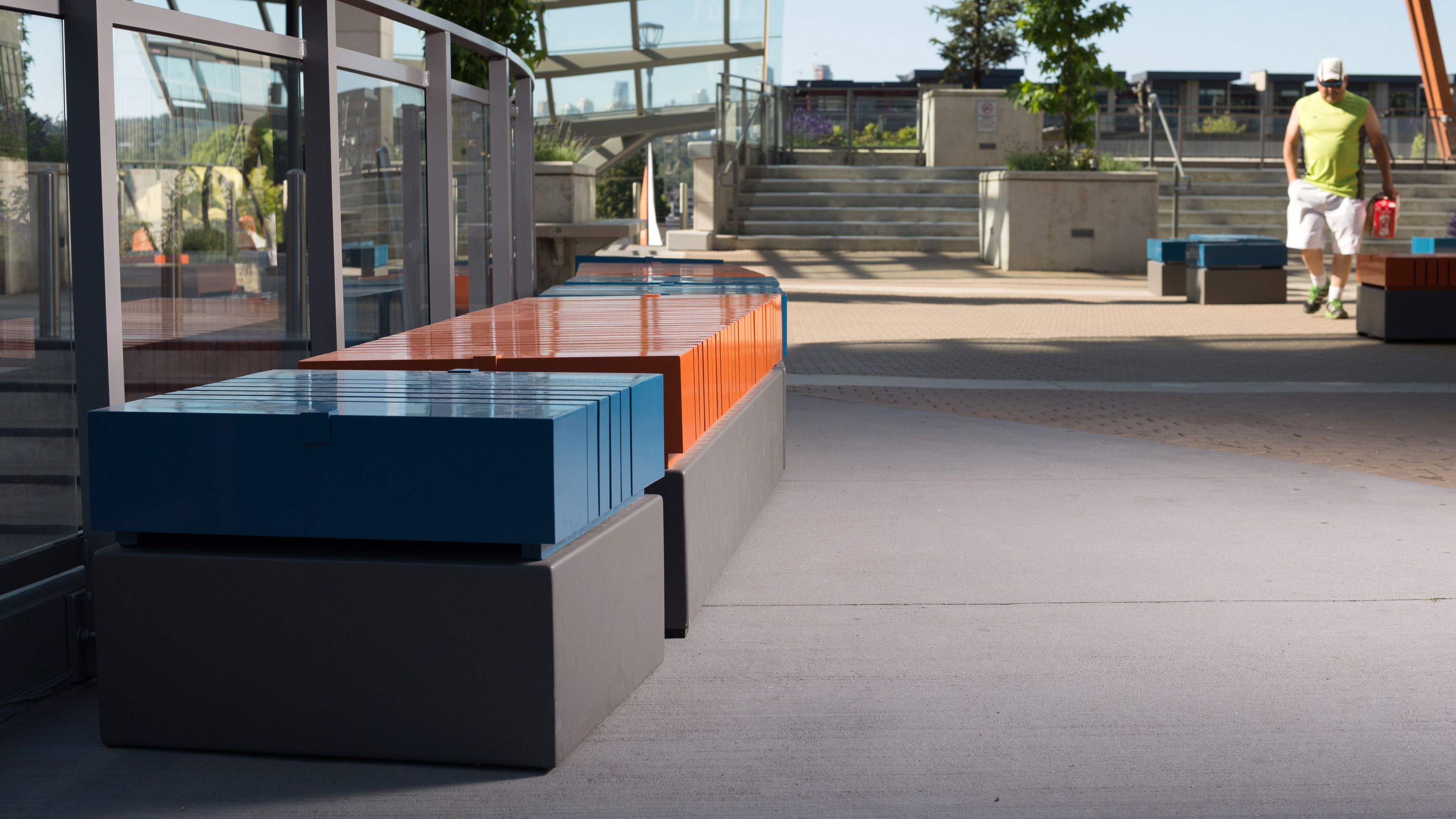
Quiet Palettes: Creating Calm and Connection
A quiet palette can give natural textures room to stand out. In Wonderment, an installation by Laura Melling of Melling Studio and Alyssa Lewis of Studio Block for IDS Vancouver 2020, landscape elements were brought indoors to create a place to pause.
White fabric, pale stones and Green Theory’s light-toned perforated aluminum Vancouver benches formed a restrained backdrop for pine trees and large rocks. The greenery became a gentle focal point, while subtle differences in texture kept the setting engaging. Applied outdoors, this approach can help planting take centre stage, creating a sense of calm through the relationship between colour, material and nature.

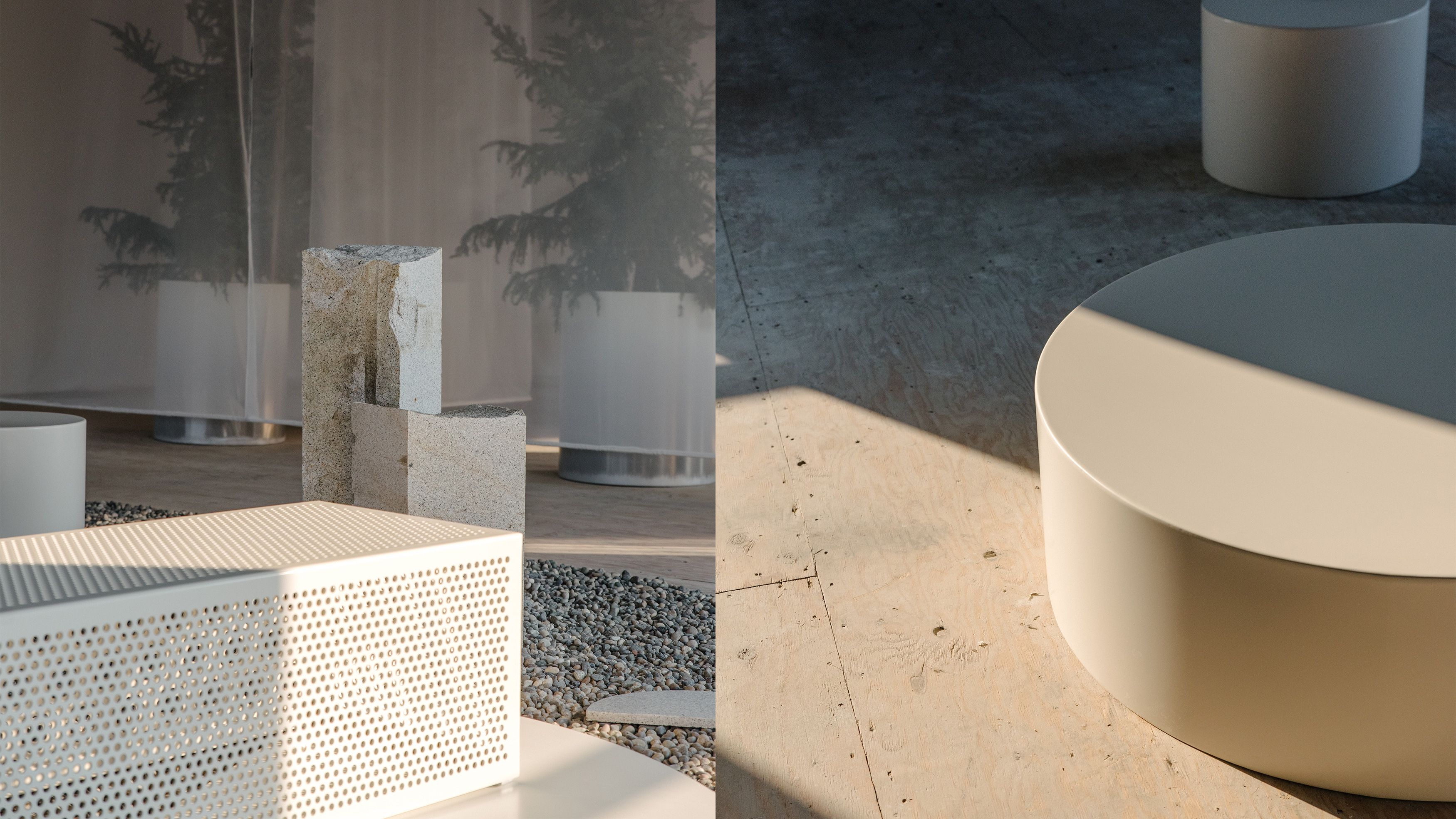
Vancouver bench and custom round platform benches for Wonderment exhibit.
Colour is Experienced in Context
Colour behaves differently depending on light, planting, scale, material, climate and surrounding architecture. A dark finish may feel dramatic in one setting and understated in another, while a bright accent might energize a public plaza but overwhelm a small courtyard.
There is no single formula for creating an emotional response. Designers can use colour in different ways, from quiet tones that settle into the landscape to warm hues that invite people in and bold palettes that create identity.
Bold Palettes: Creating Vibrancy and Identity
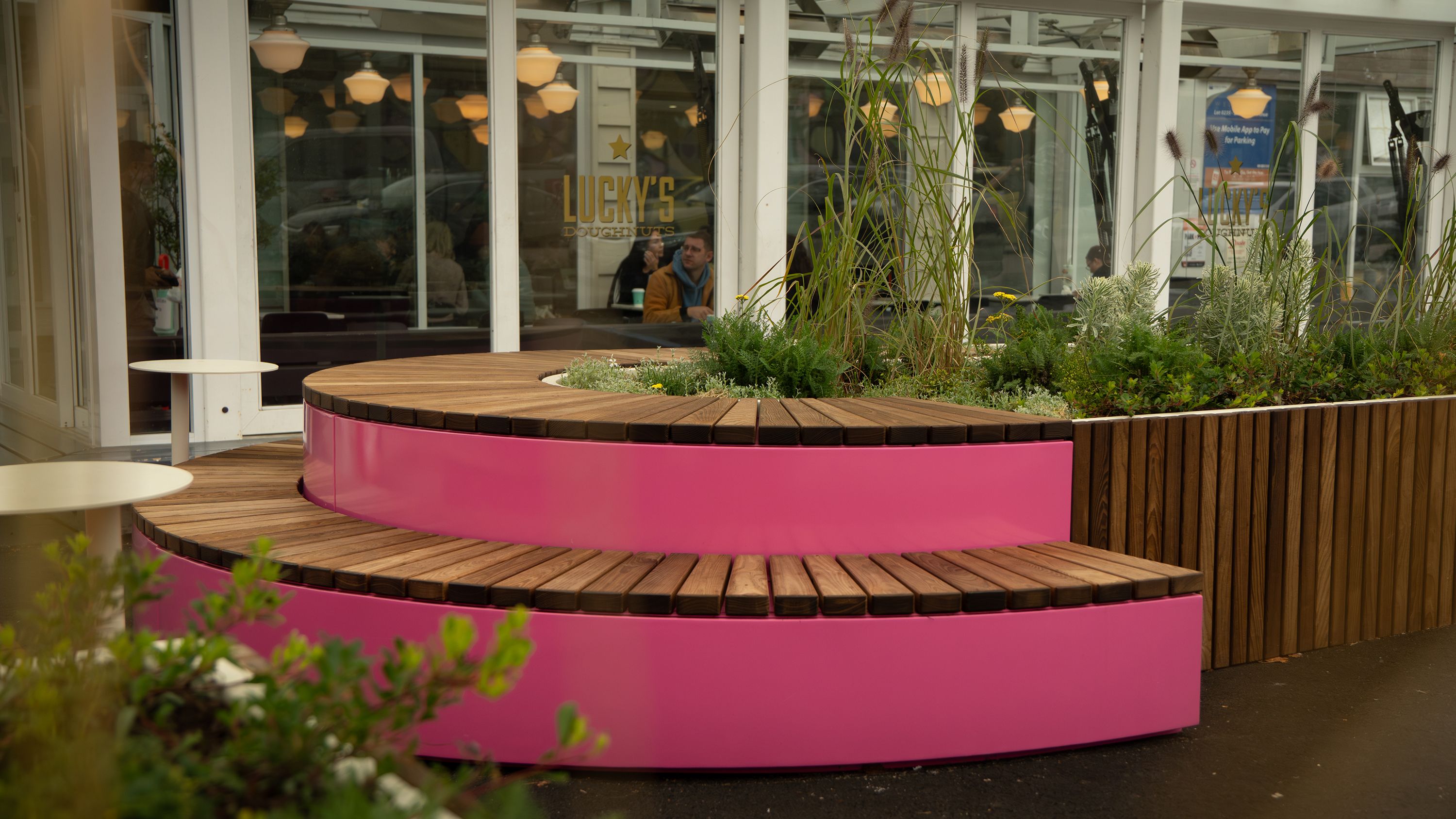
At Kits Corner, in Kitsilano, Vancouver, colourful bench seating is integrated with planters to create a social public greenspace. Designed by PWL Partnership for Low Tide Properties and the city of Vancouver, the bright pink furnishings and warm wood tones make the space feel informal and approachable, encouraging people to sit, gather and linger.

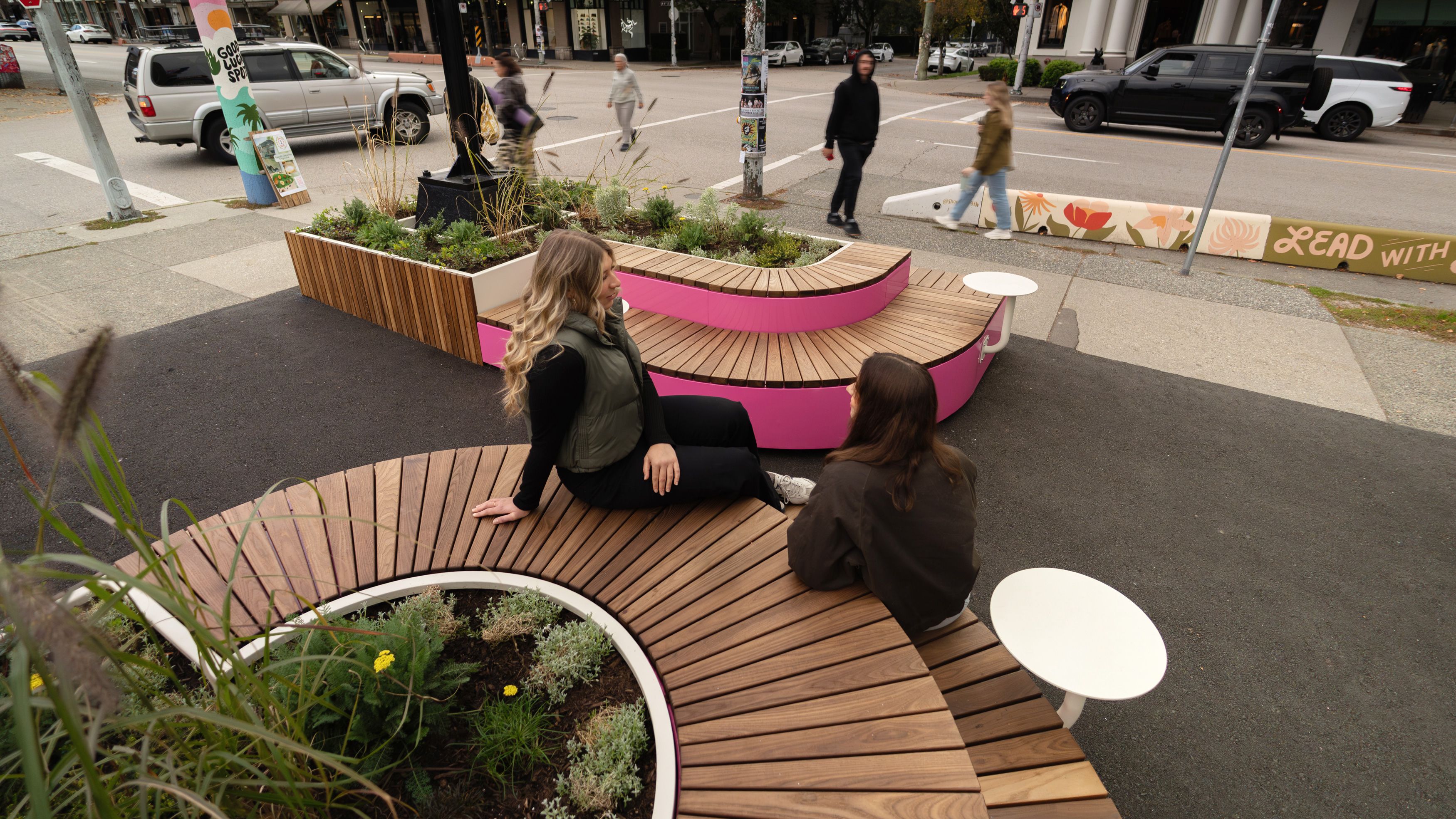
Kits Corner, in Kitsilano, Vancouver.
Warm Palettes: Creating Comfort and Welcome
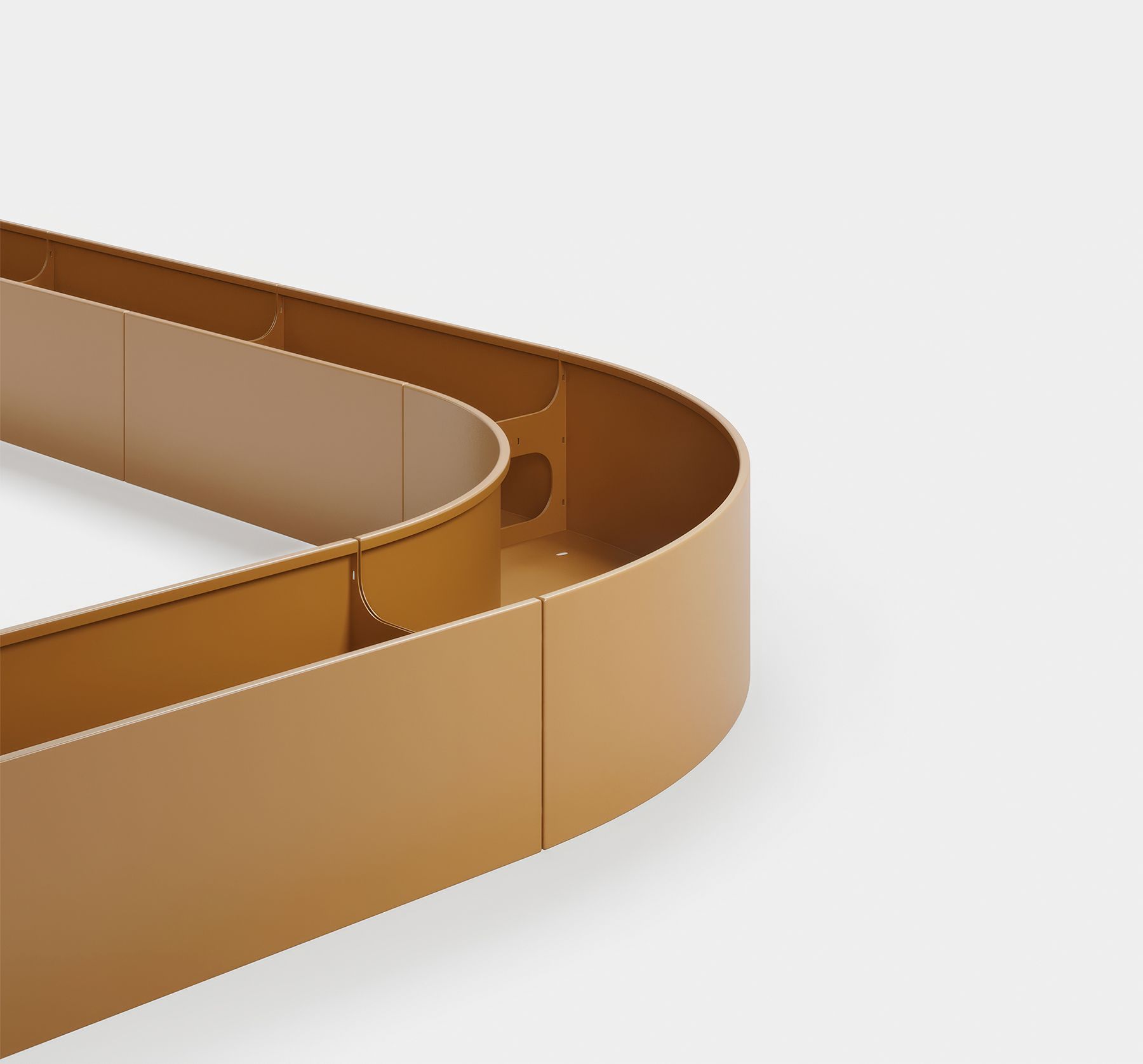
Warm, earthy hues can make outdoor spaces feel more intimate and inviting. At Amazon HQ, Bellevue, WA, LMN Architects used Green Theory’s Join planter system in weathered steel in several ways, from a low bed to a training wall with built-in lighting. The rich, rust-toned material brings warmth to the commercial and contemporary setting, creating welcoming green spaces where people can pause and connect with nature. Green Theory’s Join Flare offers a similar opportunity through both form and finish. Its gently curved profile creates a welcoming sense of openness, while tones such as Rust, Aged Copper or Suede Bronze introduce warmth that complements the surrounding planting and architecture.

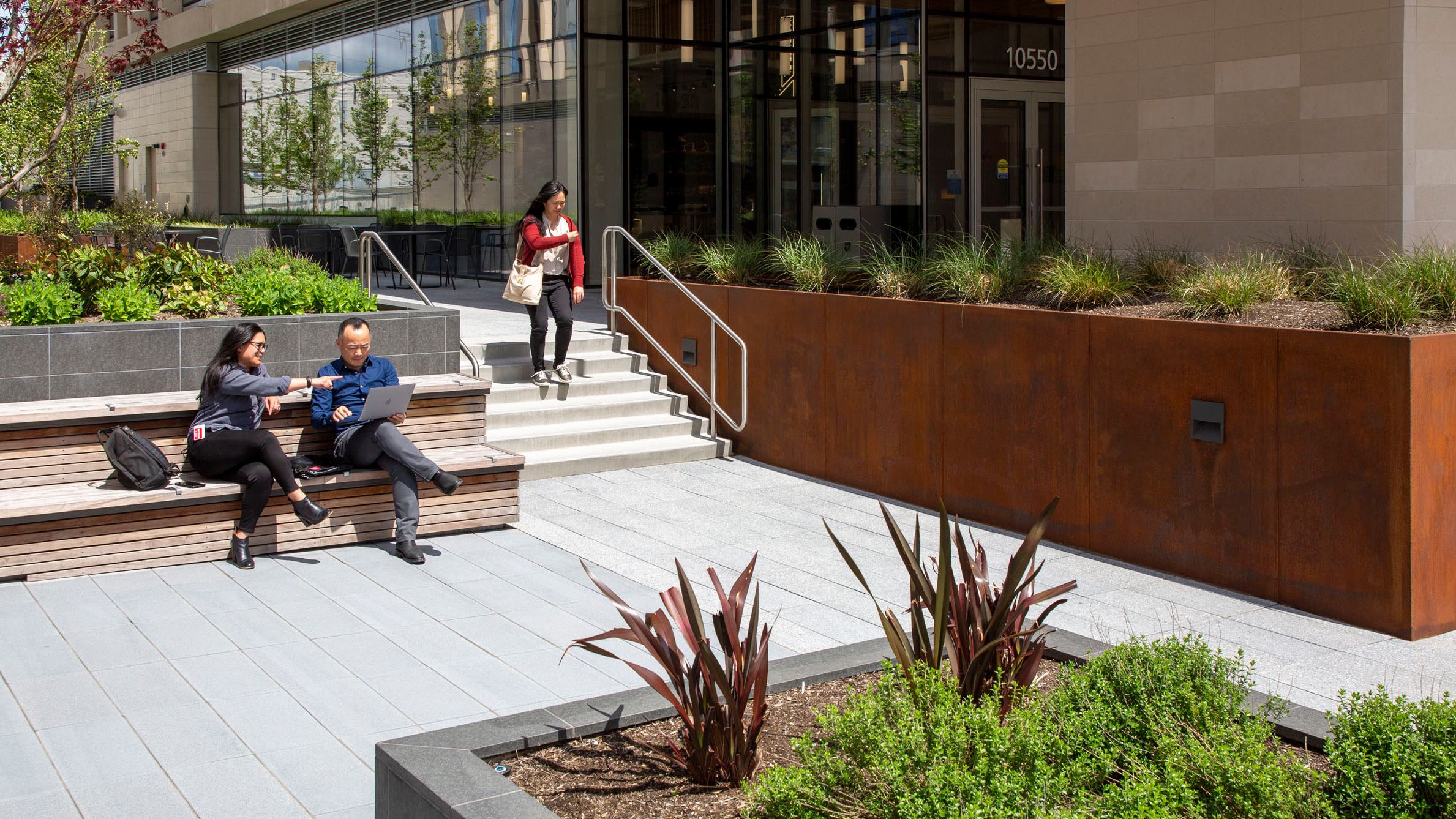
Join Edging in weathered steel at Amazon HQ, Bellevue, WA. Photography: @Adam Hunter/ LMN Architects
Designing with Intention
Every landscape has its own scale, rhythm and set of needs. Through Green Theory’s customization capabilities, planters and site furnishings can respond to those conditions and become part of the design language itself.
That level of intention gives designers greater control over how a space is perceived and experienced. Whether subtle or expressive, each choice can reinforce the atmosphere the landscape is meant to create.
The most memorable outdoor spaces are not defined by colour alone, but by how thoughtfully colour works with planting, architecture, materials and light. Whether a palette whispers or makes a bold statement, it can shape the way a place is experienced. When these elements come together, a landscape does more than look beautiful. It creates a feeling that lingers long after we leave.
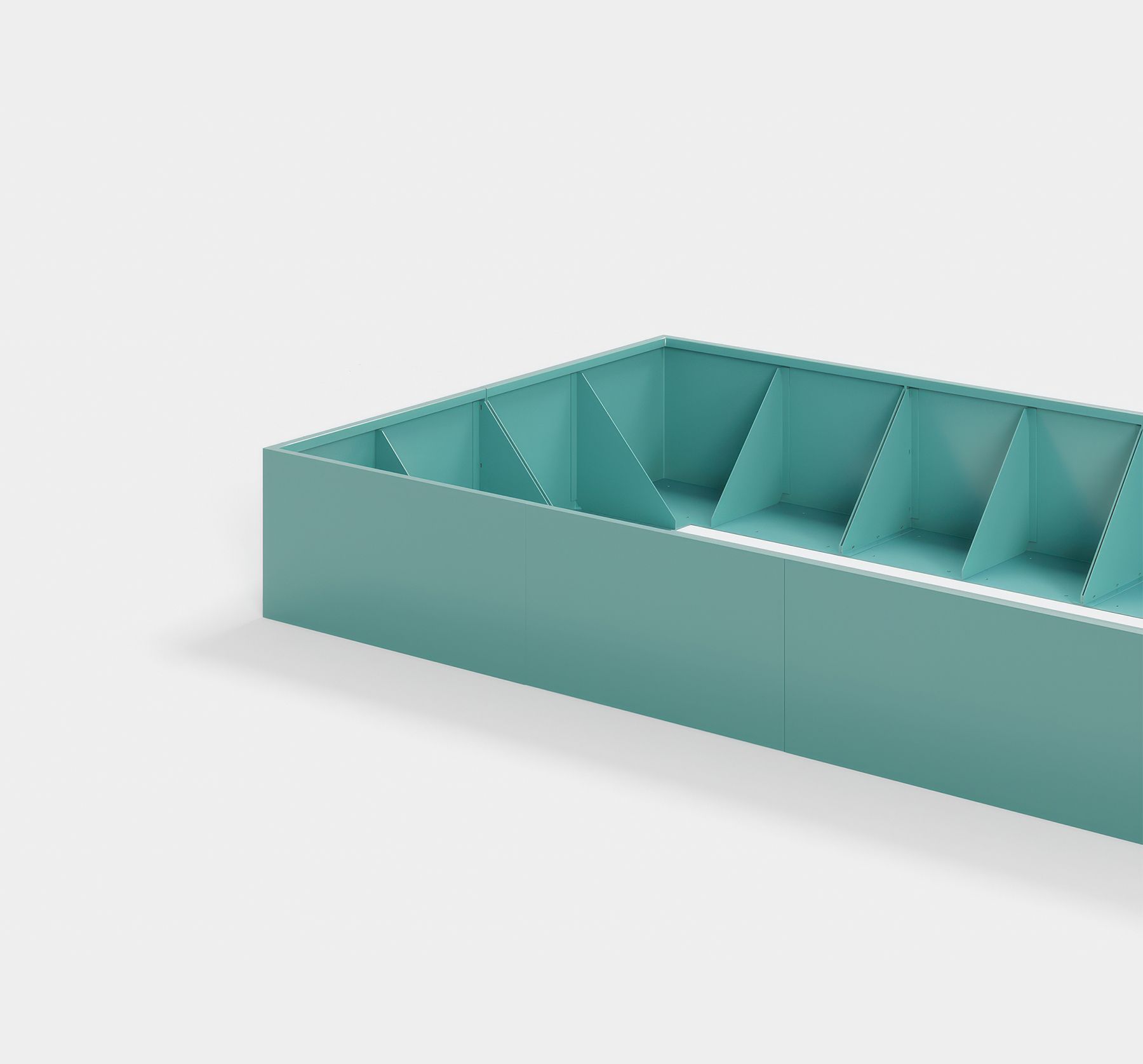
Products mentioned in this post




Keep Reading

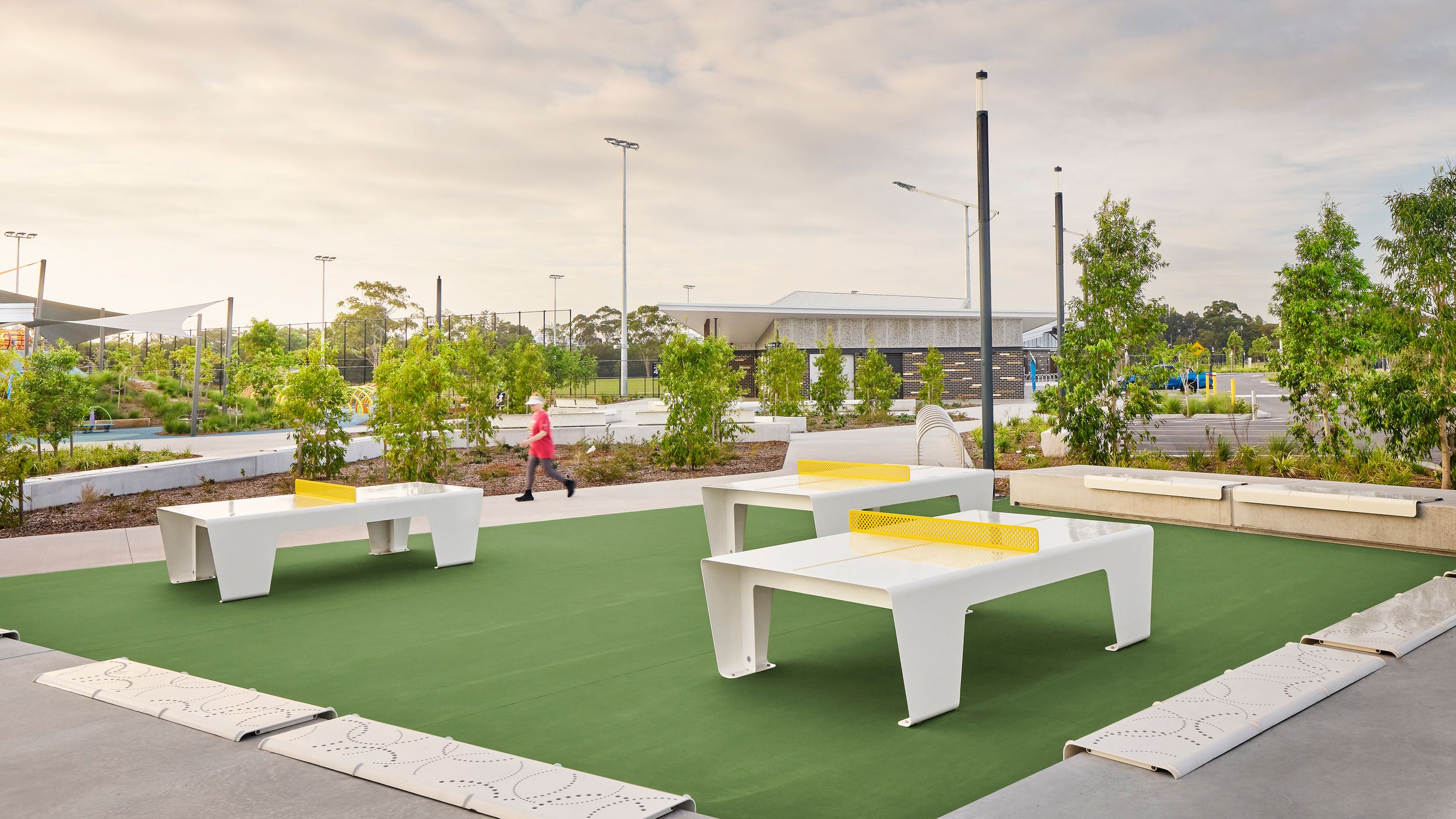
“Landscape Regulars” - How Site Furniture Shapes Social Connection
Urban Public Spaces - The emerging Third Place of today, how these spaces utilize site elements to connect people, bridge social divides, and allow people to return and become "regulars" of the landscape?
- By Sam Clemente | Green Theory contributing writer

Designing for Everyday Urban Rituals
At Kits Corner in Vancouver, a bold custom installation transforms a busy intersection into a living stage for everyday rituals, showing how site furnishing can shape the way a city is experienced.
– By Claire Hicks | Green Theory contributing writer

Designing for Pause: The Psychology of Public Seating
Designers know: a seat is never just a seat. Thoughtful seating does more than provide rest: it shapes how people move, interact, and feel in a space. Seating isn’t just furniture. It’s a spatial language. One that communicates comfort, invitation, and intent.

Designing for Trust: Why Public Spaces Should Invite, Not Exclude
In every city, the design of public space sends a message. Some spaces feel open and welcoming, inviting you to linger, play, or explore. Others send the opposite signal: using form and material to control how they’re used, or to discourage certain activities entirely.