Projects

Designing for Everyday Urban Rituals

At Kits Corner in Vancouver, a bold custom installation transforms a busy intersection into a living stage for everyday rituals, showing how site furnishing can shape the way a city is experienced.

– By Claire Hicks | Green Theory contributing writer

A Place of Everyday Life

Where West 4th Avenue meets Yew Street, you feel the city’s pulse. As one of Vancouver’s busiest commercial stretches, West 4th is defined as much by its social energy as by the streetscape and buildings that frame it.

In September 2025, Kits Corner arrived as a public park pop-up adjacent to the popular 49th Parallel Coffee Roasters. The café anchors the corner as a gathering point, where quick coffee stops often turn into longer stays. It functions as an informal crossroads where paths and routines overlap.

The project responds to both the opportunities and constraints of its site. With limited space and continuous foot traffic, the design needed to amplify the street's existing patterns. The installation reinforces what was already there by formalizing what was missing: a place to sit within an otherwise highly active but underserved public realm.

Created in partnership with landscape architecture firm PWL Partnership, Kits Corner explores how custom site furnishings can support the social life already present in the neighbourhood, giving form to the everyday rituals of meeting, lingering, and sharing space.

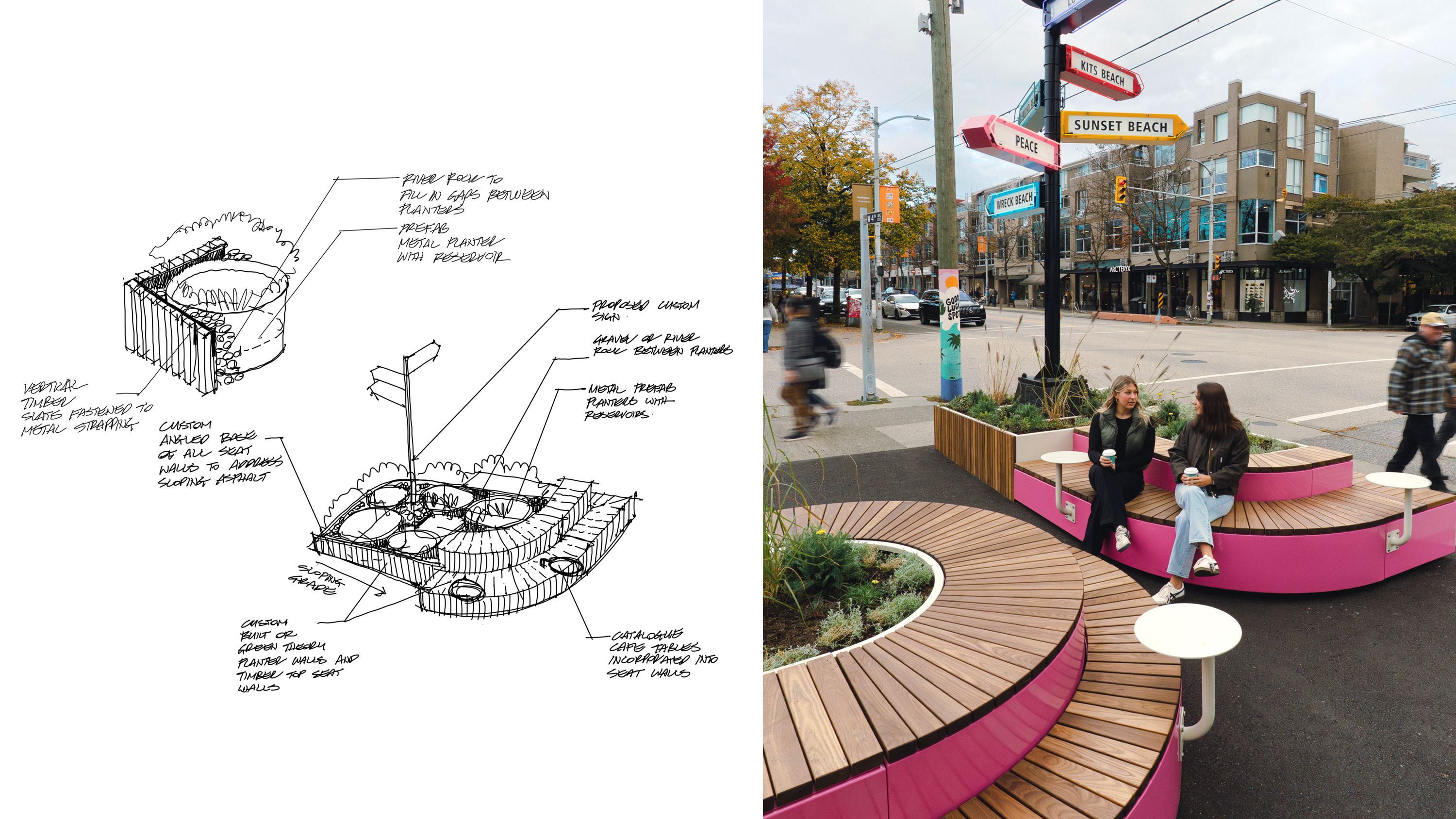
Developed and imagined at PWL Partnership.

Designing the Corner

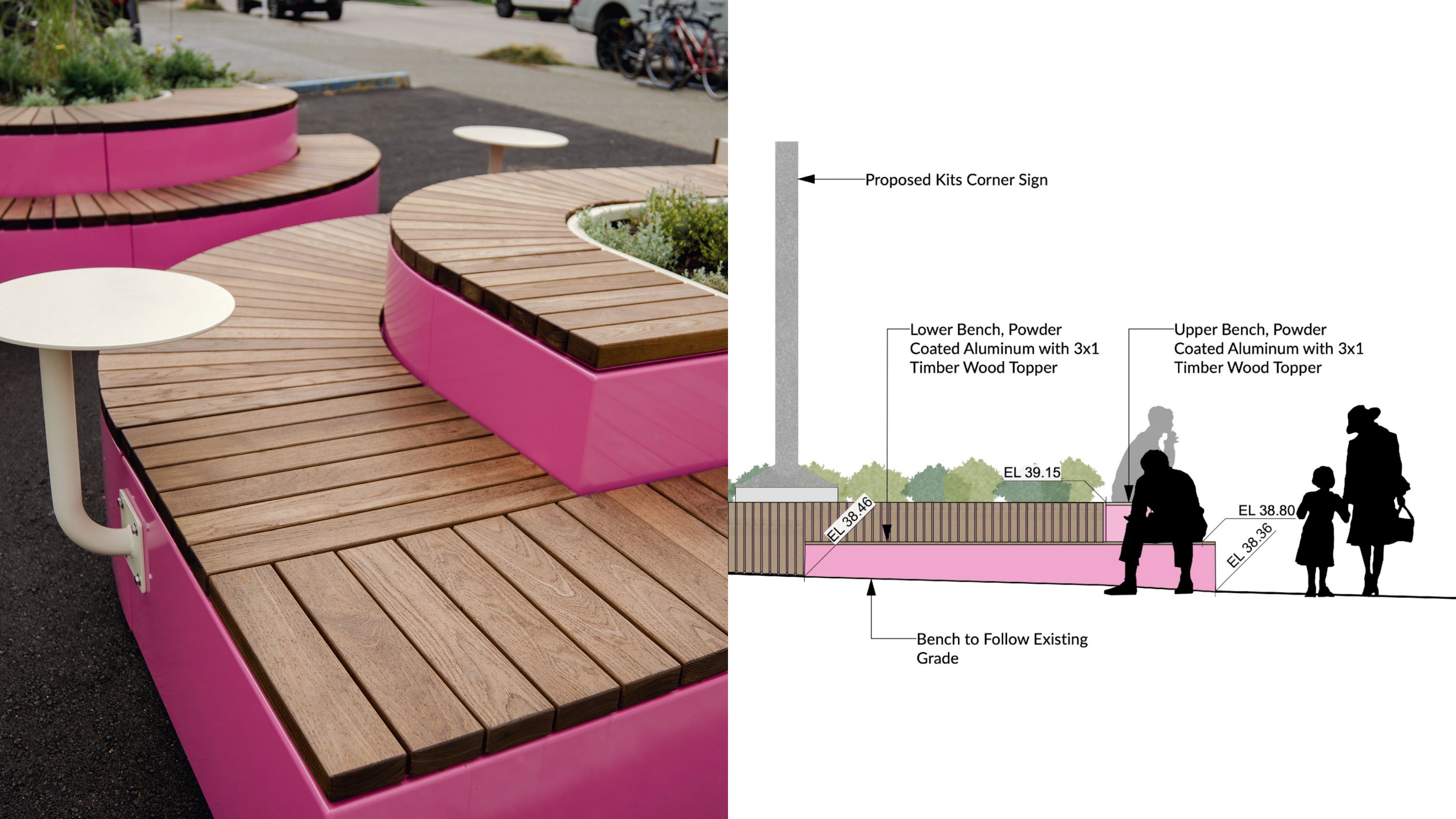
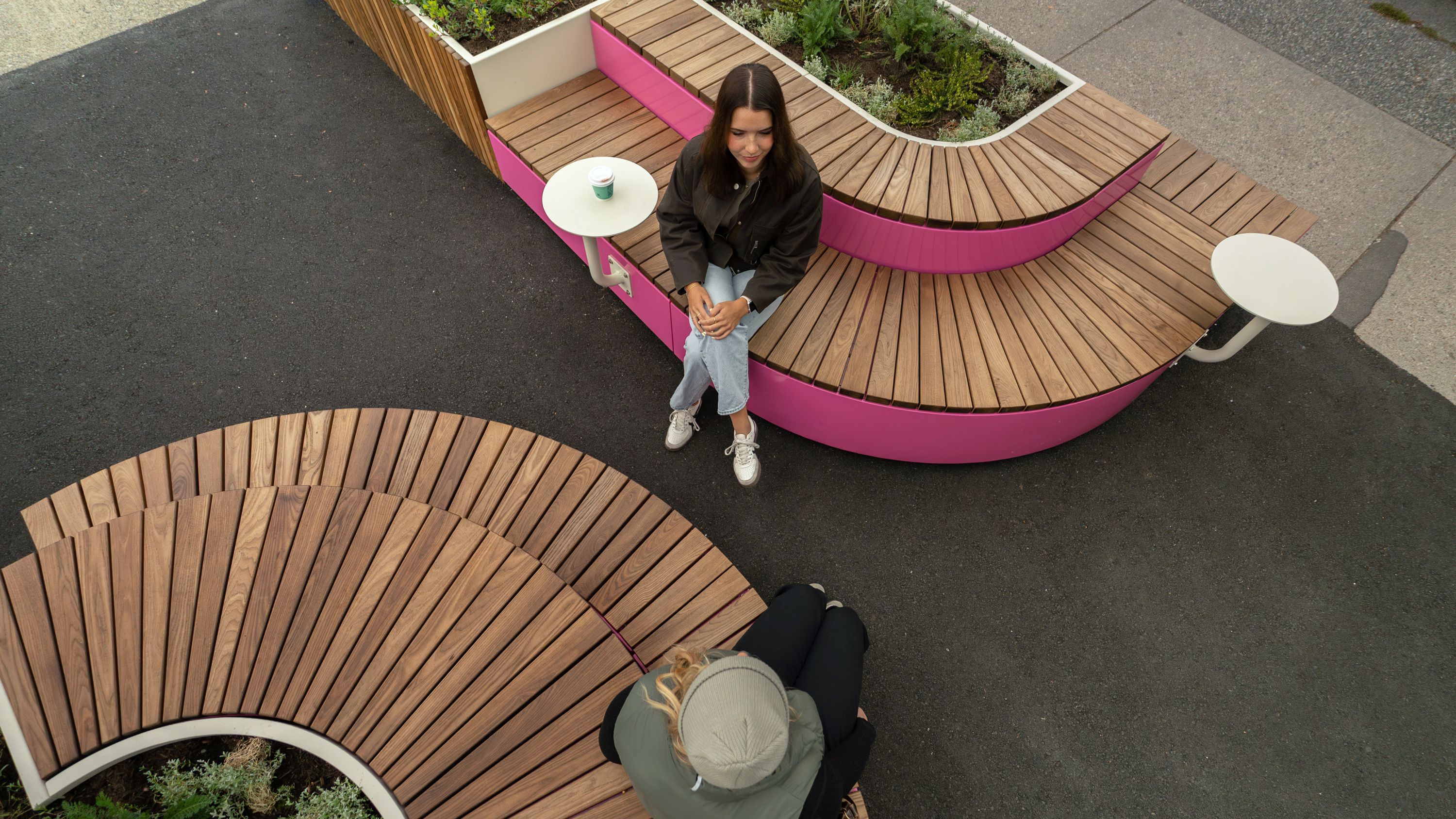
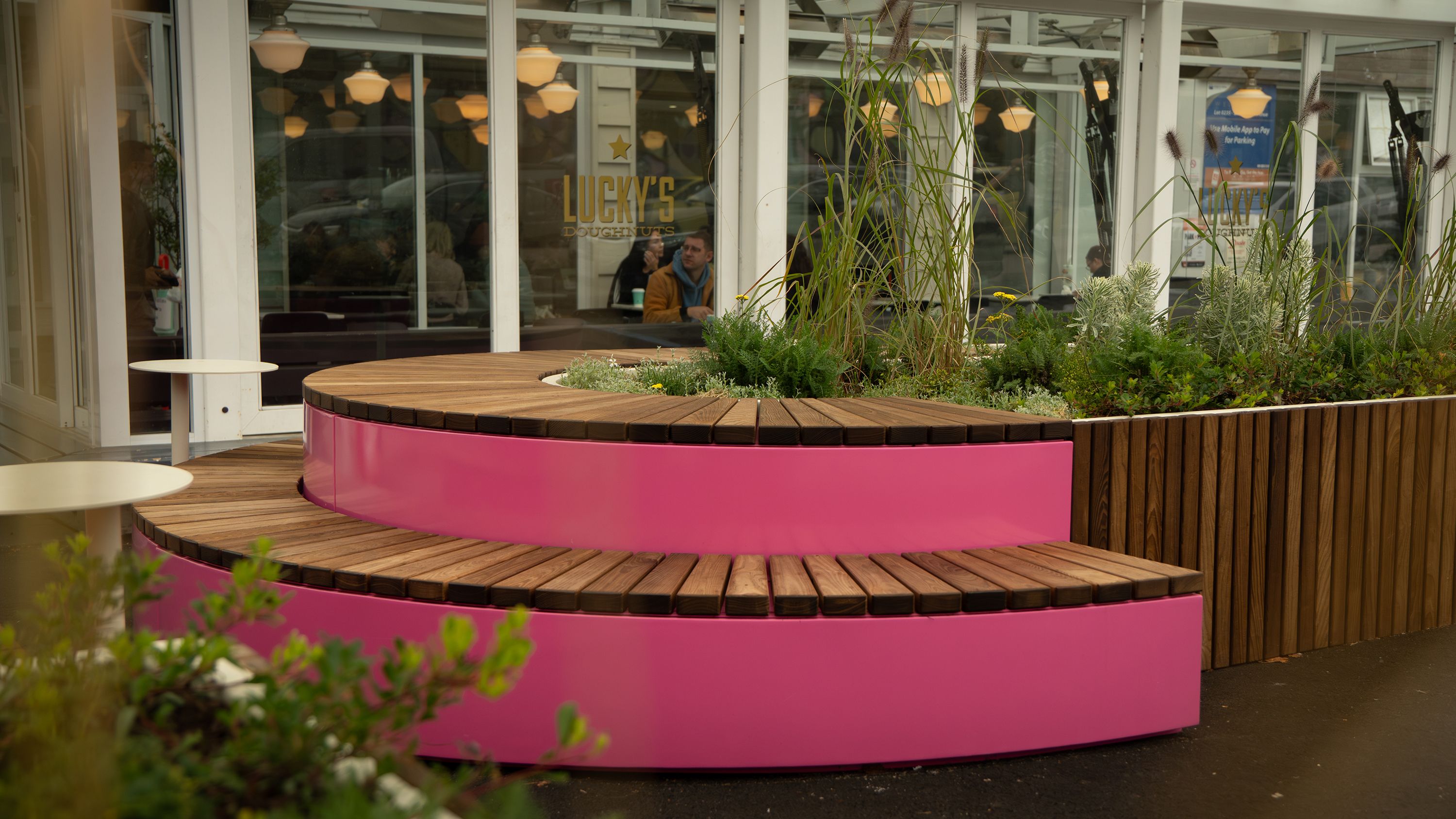
Working with the recently installed signpost by Low Tide Properties, the design team at PWL wanted to play off the sign's bright neon colours and retro character by introducing curved forms and bold finishes to proposed public realm furnishings. The project was developed by PWL Partnership, with key contributions from Kayla Poch (Senior Landscape Technician), Amanda Passero (Landscape Designer), and Derek Lee (Partner). As PWL's Kayla Poch explains, the team looked to “bring a feature colour and theme into the shapes and organization of the space.” The result is an unapologetically vibrant pink powder-coated finish on the aluminum planters, complete with winding wood-top benches and built-in tabletops.

Seating was a priority, as the corner is one of the few west-facing open areas along West 4th, offering a rare pocket of sun in a city that doesn’t always get it. The material palette also draws from the surrounding landscape, grounding the installation in its local context. Wooden bench tops echo the driftwood logs found along nearby Kitsilano Beach, while the pink powder-coated aluminum references the seasonal cherry blossoms that line adjacent streets.

From the start, the team understood this wouldn’t be a standard product. Poch described how the installation was always intended to be custom, shaped by the geometry, constraints, and character of the site itself. When it came to translating this intent into something buildable, Green Theory was able to offer the precision necessary to bring the installation to life.

Custom Join Modular planters and seating for Kits Corner

From Workshop to Sidewalk

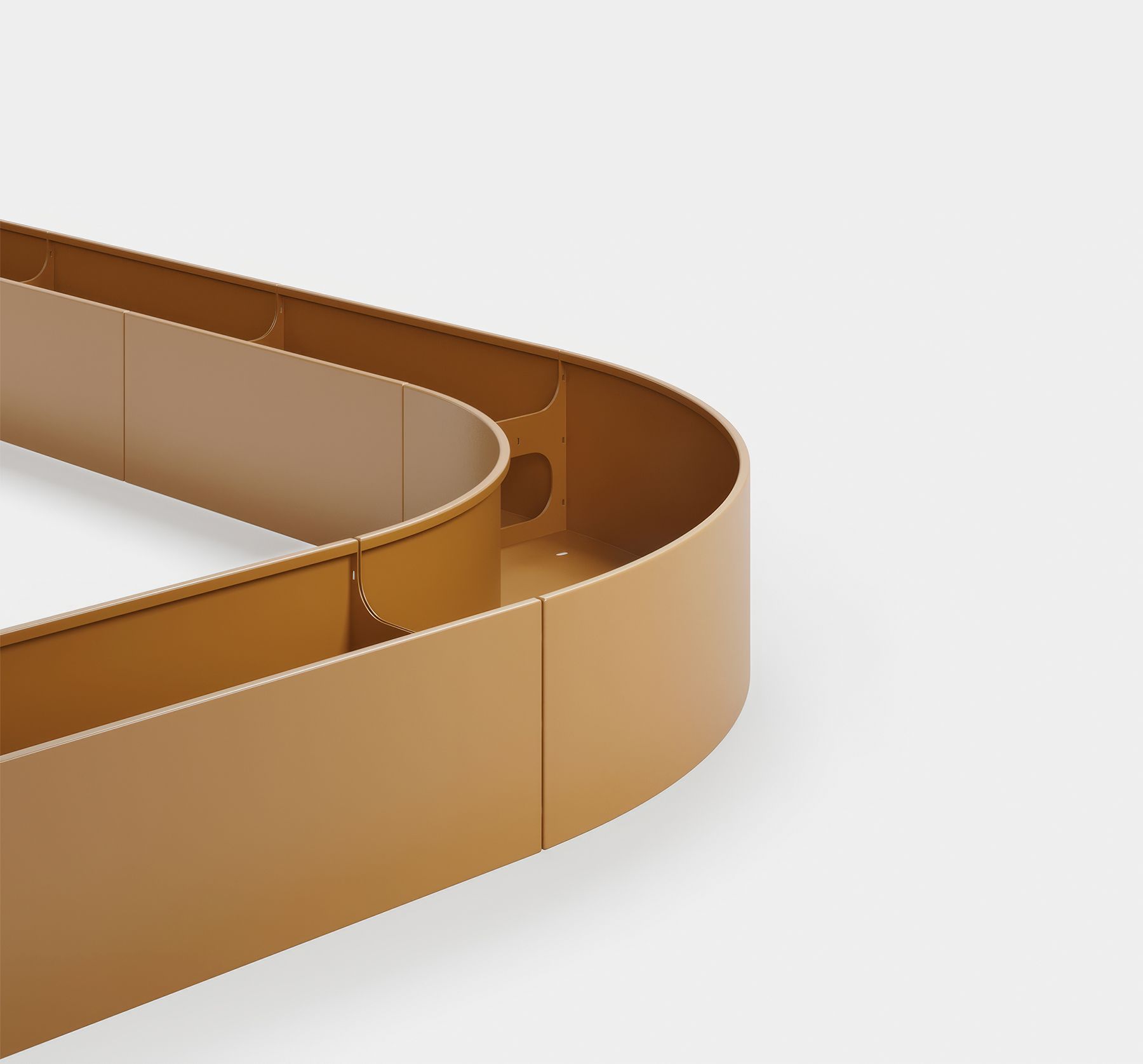
While the final installation appears clean and seamless, much of the work took place behind the scenes as the design was translated into a buildable structure. Hidden fasteners, structural connections, and careful detailing ensure the piece maintains a refined appearance while remaining durable enough for public use. As Green Theory Fabrication Design Manager Dan Bailey explains, “It looks simple, but behind the scenes there’s a lot of effort into hidden fasteners.”

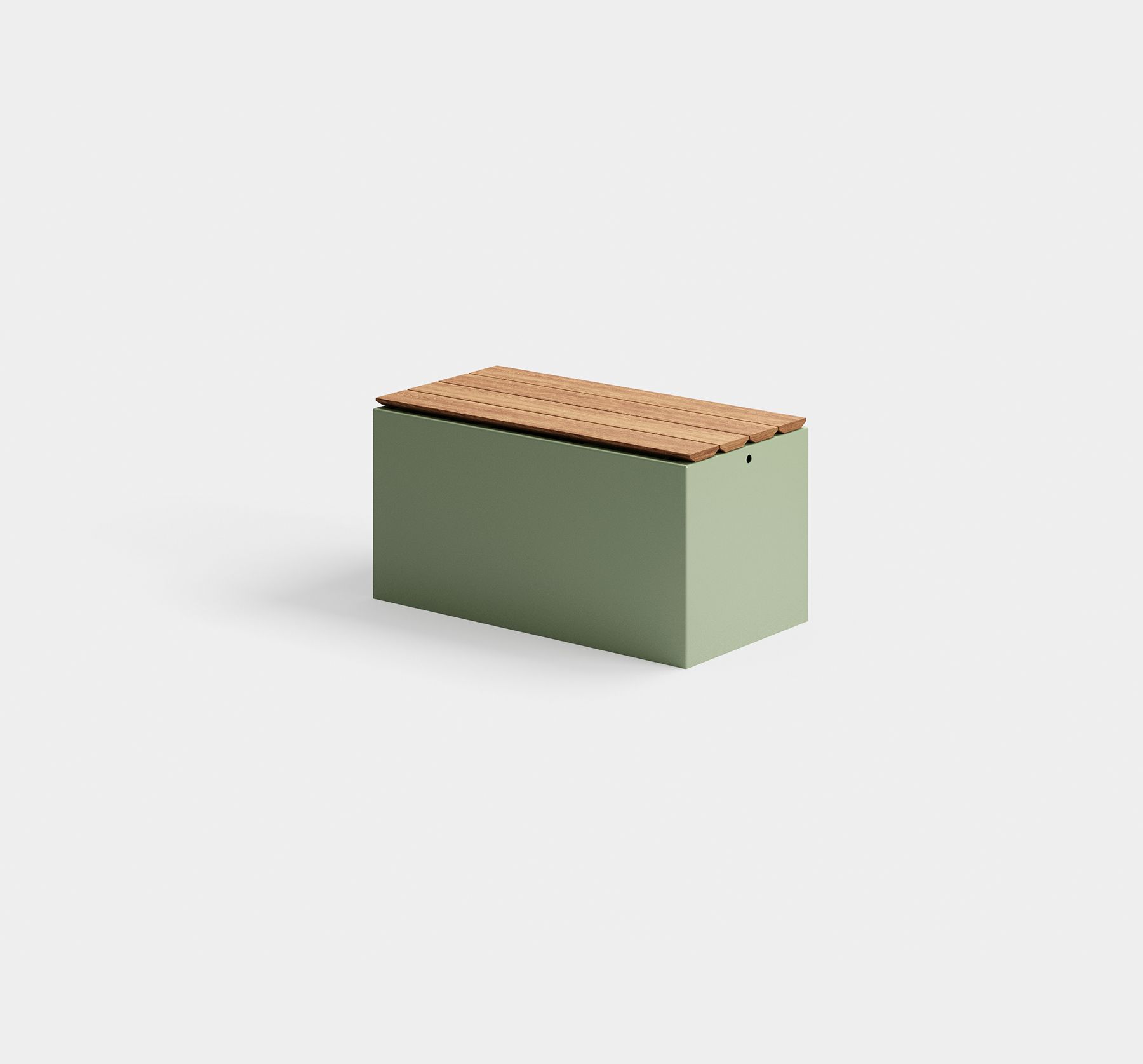
Although the installation was designed specifically for this corner, its construction builds on fabrication methods the team regularly uses in other projects. Standard planter and bench components were adapted and combined in new ways to respond to the geometry of the site, demonstrating how custom pieces often evolve from familiar systems to tailor a specific environment.

Fabrication took place in sections within the workshop, where individual components were welded, assembled, and prepared for installation. Once on site, the pieces were carefully positioned, levelled, and joined together to form the continuous system of planters, benches, and surfaces that define the installation today and work carefully to adapt with the existing slope of the site.

For the fabrication team, seeing the project installed was a rewarding moment. As Bailey notes, it is always satisfying to see a custom project come to life in the city, particularly in a prominent location. “You’ve got part of a landmark,” he reflects, describing the finished installation in place.

Kits Corner pop-up park, Vancouver. Commissioned by Low Tide Properties

When a Piece Finds Its Place

What begins as carefully designed objects gradually becomes something more fluid and adaptable, shaped by the ways people choose to occupy space. At Kits Corner, the installation invites interaction rather than prescribing it. Its form sparks curiosity, allowing people to lean, sit, gather, or simply pause within the steady movement of the street.

Its success was immediate. As Poch reflects, “the second it was installed, people were using it.” There’s no hesitation, no learning curve, just instant occupation.

The design reflects the convergence of paths, people, and activities that define the intersection, reinforcing the corner as a place where daily routines and chance encounters overlap. In a short time, it has come to feel inseparable from its surroundings, illustrating how custom pieces become part of the city through use, woven into the rhythms of everyday life.

Keep Reading

Products, Editorial

Designing for Pause: The Psychology of Public Seating

Designers know: a seat is never just a seat. Thoughtful seating does more than provide rest: it shapes how people move, interact, and feel in a space. Seating isn’t just furniture. It’s a spatial language. One that communicates comfort, invitation, and intent.

Editorial, Products

“Landscape Regulars” - How Site Furniture Shapes Social Connection

Urban Public Spaces - The emerging Third Place of today, how these spaces utilize site elements to connect people, bridge social divides, and allow people to return and become "regulars" of the landscape?

- By Sam Clemente | Green Theory contributing writer

Interview, Editorial, Projects

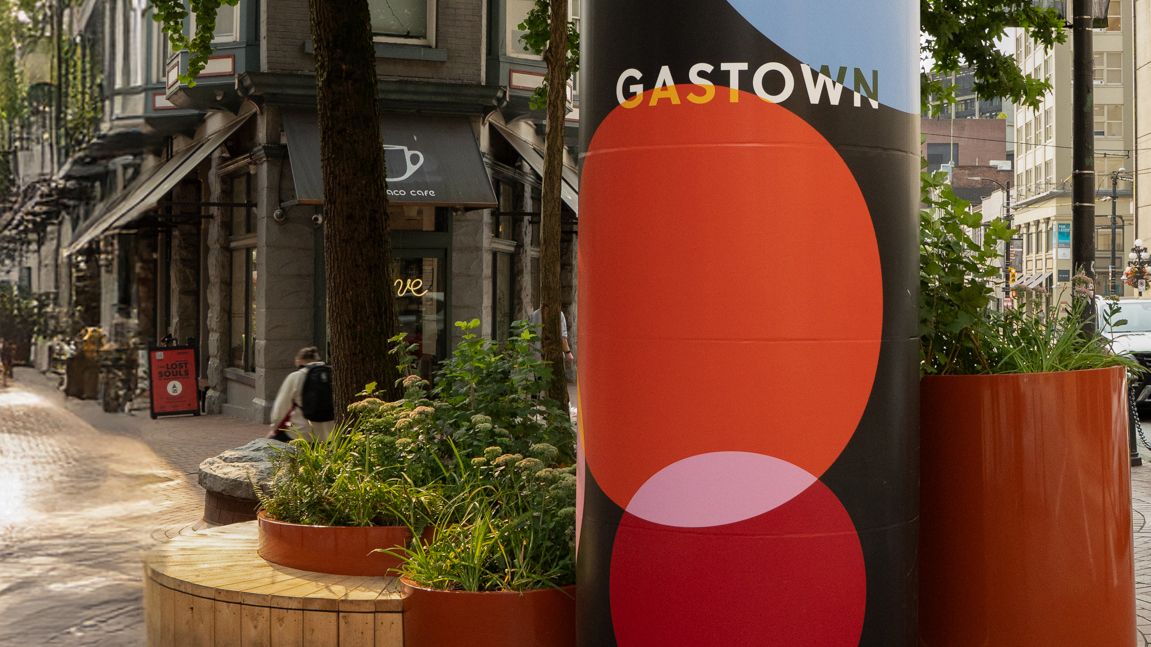
Gastown: From Pilot to Possibility

Beneath Gastown’s heritage charm, a transformation is underway. The City’s Public Spaces Plan envisions streets that invite walking, gathering, and everyday connection. It’s about creating a place where history and community meet in the open air.