

For decades, stormwater was managed through underground pipes and concrete channels designed to move water away as quickly as possible. Today, that model is proving inadequate. Increased urbanization and more intense rainfall events are overwhelming traditional systems, pushing cities toward new approaches rooted in ecology rather than resistance.
Editorial
How Are Landscape Architects Reinventing Stormwater Systems?
Each year on Earth Day, conversations around climate and design return to a central question: how do we live with water rather than fight against it? In 2026, landscape architects are answering that question by fundamentally rethinking stormwater systems not as hidden infrastructure, but as visible, performative landscapes that shape public life.
– By Zach Curry | Green Theory contributing writer
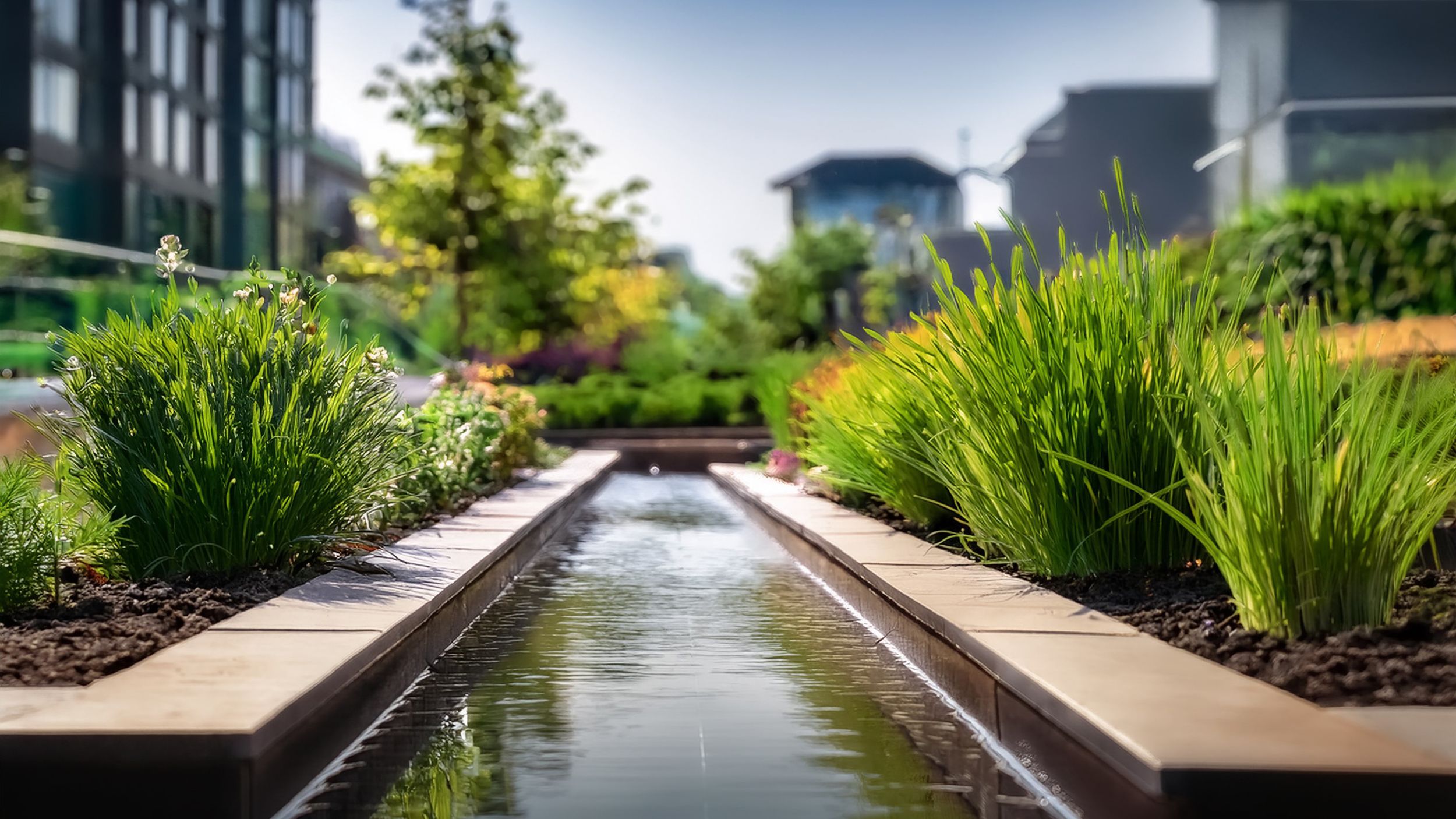
From Pipes to Landscapes
One of the most influential shifts in recent years is the move toward decentralized, nature based systems. Rather than relying on a single network of pipes, designers are distributing water management across sites through bioswales, wetlands, permeable paving, and retention landscapes. These systems slow, store, and filter water where it falls.
The global “sponge city” movement, led by Kongjian Yu and his firm Turenscape, has become a defining model. Projects like Qunli Stormwater Park in Harbin transform flood prone land into a layered wetland that absorbs seasonal water, filters pollutants, and provides public access. Rather than hiding infrastructure, the park makes water cycles legible and experiential.
This approach has scaled across China and beyond, influencing policy and design worldwide. Sponge cities use interconnected green spaces, ponds, and planted systems to absorb and reuse rainwater, reducing flood risk while improving ecological health and livability.
Stormwater as Public Space
In North America, landscape architects are similarly redefining stormwater infrastructure as civic space. Hunter’s Point South Waterfront Park, designed by SWA/Balsley with Weiss/Manfredi, integrates flood protection directly into its design. Bermed lawns, salt tolerant plantings, and sculpted topography double as both recreational space and coastal defense.
Likewise, The Bentway, led by PUBLIC WORK and Ken Greenberg Consultants, reimagines leftover infrastructure beneath an elevated highway as a flexible public landscape. While not solely a stormwater project, it incorporates permeable surfaces and planting systems that reduce runoff while activating underused urban space.
These projects reflect a broader trend: infrastructure is no longer separate from experience. It is designed to be inhabited, visible, and multifunctional.

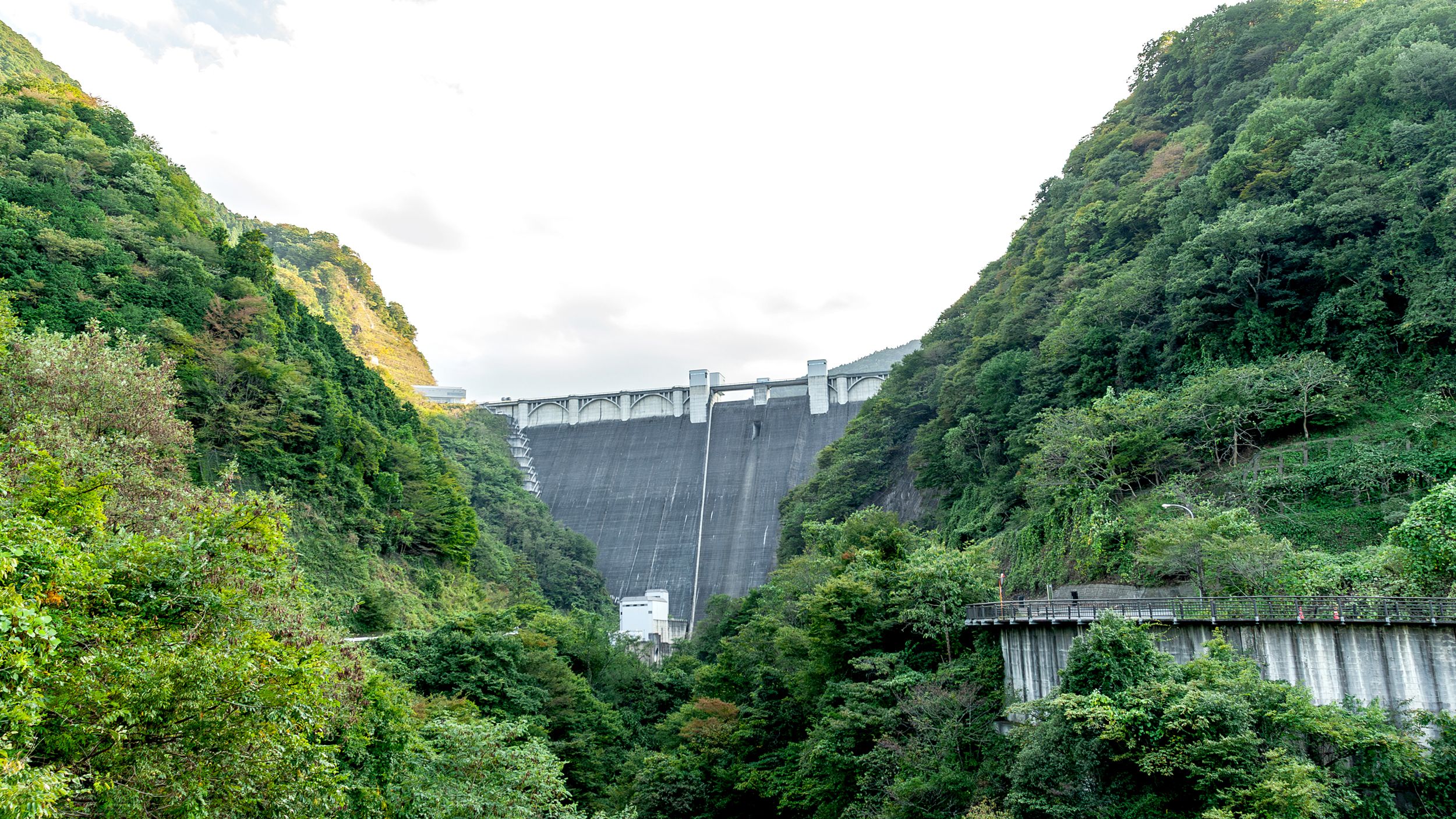
Urayama Dam, Japan
Hybrid Systems and Climate Adaptation
Cities are increasingly adopting hybrid approaches that combine engineered systems with ecological processes. In Copenhagen, the Cloudburst Plan transforms streets, parks, and plazas into a citywide network for managing extreme rainfall. Select streets become temporary channels during storm events, directing water into retention basins and green corridors.
Similarly, ResilienCity Park demonstrates how compact urban sites can store millions of gallons of stormwater underground while functioning as everyday recreational space above. These projects show how landscape architecture is operating at both the site scale and the systems scale, linking individual interventions into broader urban strategies.

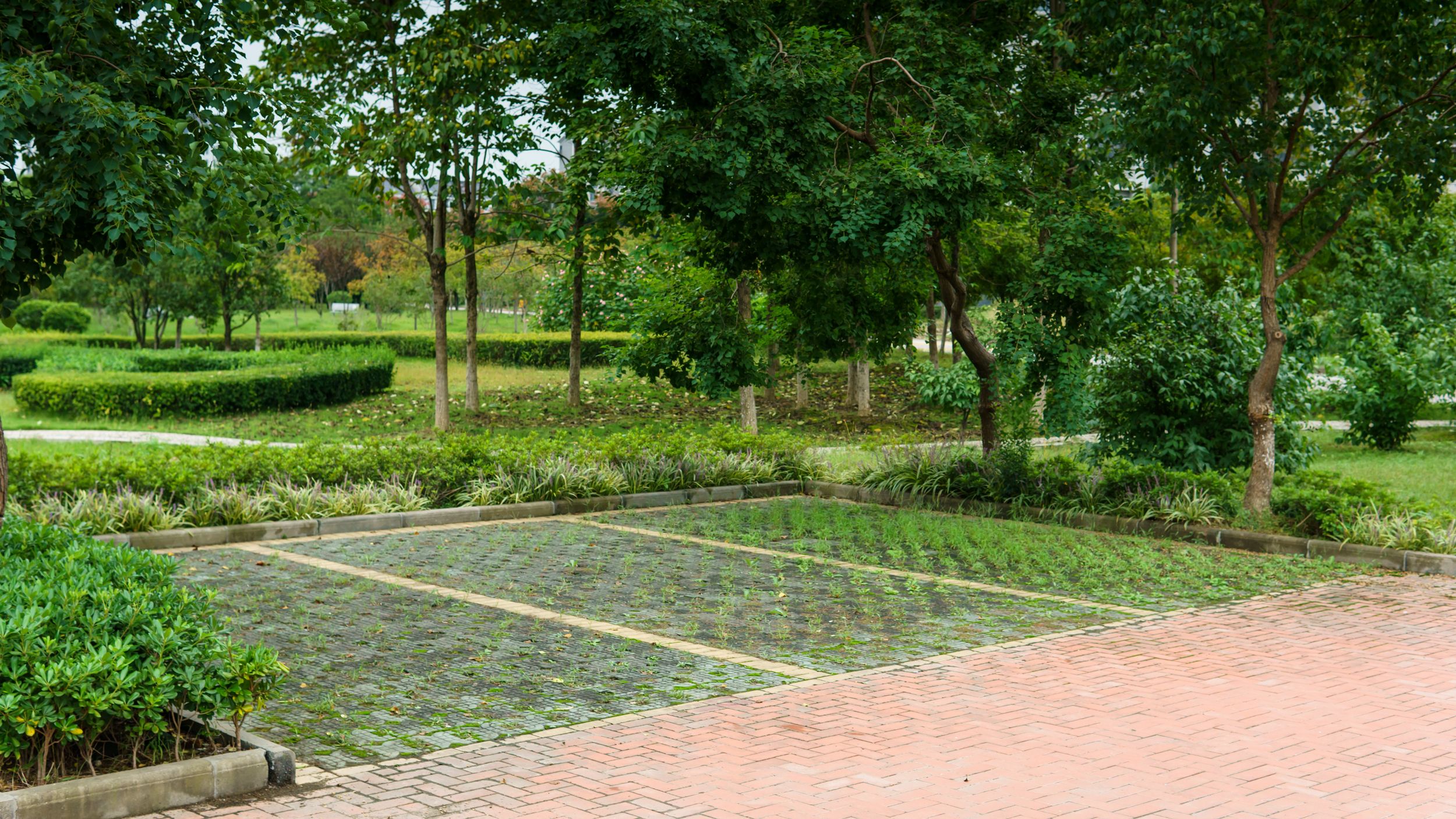
Designing with Time and Change
A critical aspect of contemporary stormwater design is embracing variability. Landscapes are no longer designed for a single static condition, but for cycles of wet and dry, flood and drought. This temporal dimension allows spaces to shift in appearance and function over time.
Projects like Gowanus Sponge Park, developed by DLANDstudio, illustrate this approach. The park uses a series of planted basins and engineered soils to capture and filter polluted runoff before it enters the Gowanus Canal. During storms, the site fills with water; in dry conditions, it becomes an accessible green space.
This flexibility reflects a broader philosophical shift. Instead of designing against water, landscape architects are designing with it, allowing natural processes to shape space over time.
A New Design Ethic
Underlying these innovations is a deeper change in mindset. Stormwater is no longer treated as waste to be removed, but as a resource to be managed, reused, and celebrated. Landscape architects are uniquely positioned to lead this shift, bridging engineering, ecology, and public experience.
Nature based solutions such as green roofs, rain gardens, and constructed wetlands are now standard tools in the discipline, offering benefits that extend beyond flood control to include water purification, habitat creation, and improved urban microclimates.
Looking Forward
As climate pressures intensify, the reinvention of stormwater systems will only accelerate. The most forward thinking projects are not simply mitigating risk, they are redefining the relationship between cities and water.
On this Earth Day, these landscapes offer a clear vision of what is possible: cities that absorb rather than repel, landscapes that perform as infrastructure, and public spaces that make environmental processes visible and meaningful.
In this new paradigm, water is no longer the problem. It is the starting point for design.
Keep Reading

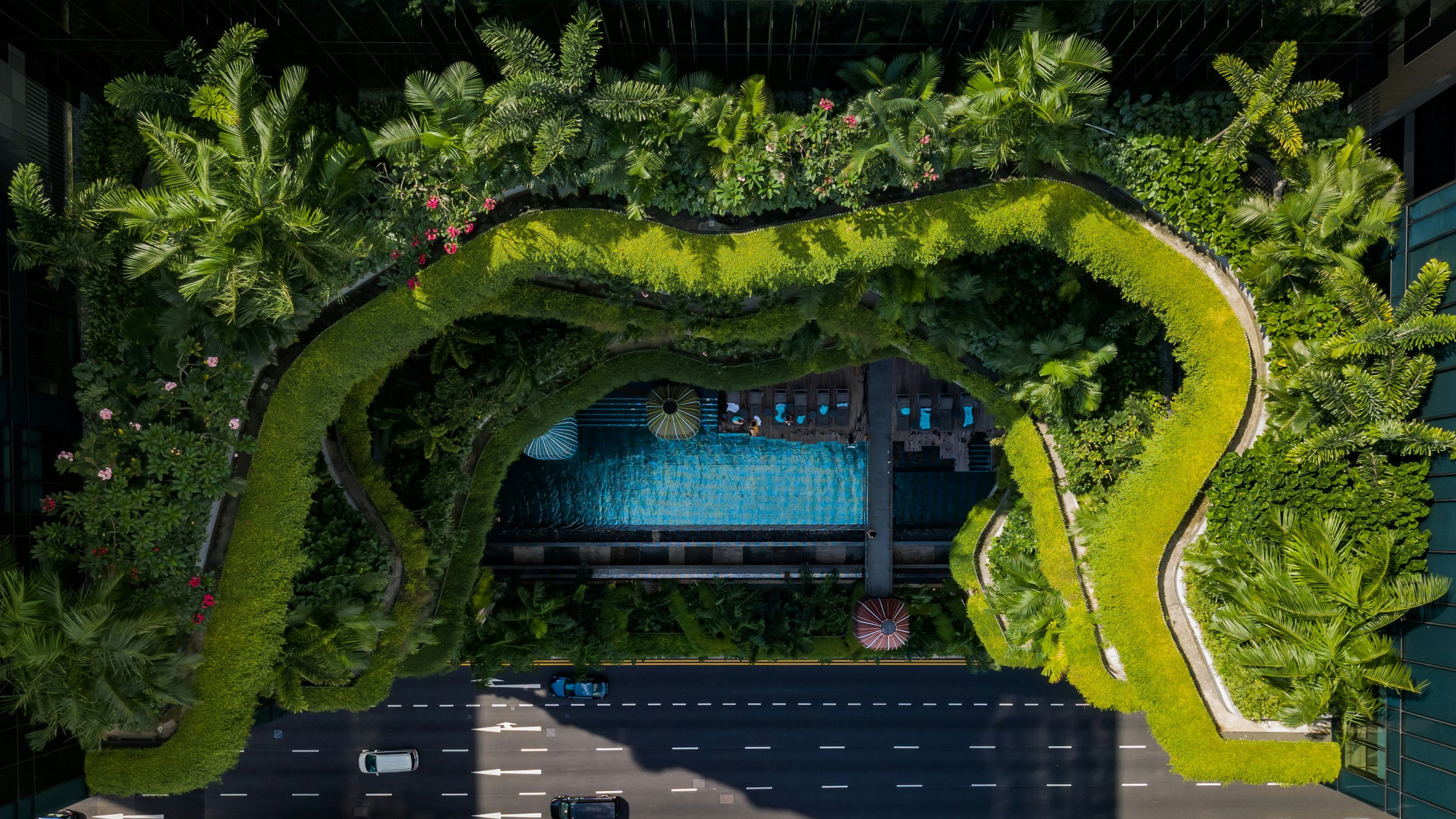
Biophilic Architecture: Field Trip to Singapore, The Garden City
Biophilia is no longer a trend. It is a biological necessity. As we look toward Earth Month this April, the design community is facing a pivotal shift toward radical restoration. To truly understand how nature can be woven into the very fabric of a skyscraper, we take a look at biophilic architecture in Singapore. Known as the Garden City, this city-state offers more than just inspiration, it provides a proven roadmap for redefining the modern urban centre.
- By Jill Koh Chiu | Green Theory contributing writer

“Landscape Regulars” - How Site Furniture Shapes Social Connection
Urban Public Spaces - The emerging Third Place of today, how these spaces utilize site elements to connect people, bridge social divides, and allow people to return and become "regulars" of the landscape?
- By Sam Clemente | Green Theory contributing writer

Urban Rooftops as the New Green Commons
Imagine stepping onto a rooftop and finding a lush, green space buzzing with pollinators, fresh produce growing in raised beds, and a shaded seating area for people to gather and connect. Across the world, cities are embracing rooftop greenery not as an afterthought, but as a core part of urban planning.